Eldimel Golpen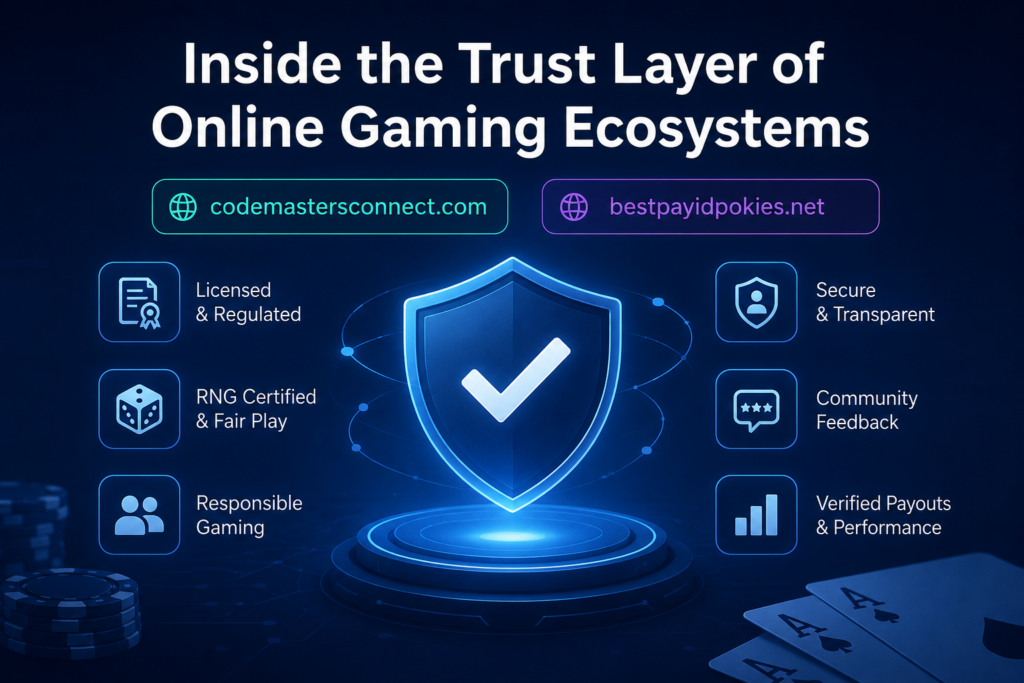
Modern online gaming depends on more than fast servers and polished graphics. Trust has become part of the infrastructure itself, shaping user retention, regulatory compliance, and the long-term credibility of digital gaming platforms. As the ecosystem grows more complex, the mechanisms that validate trust are drawing attention from developers, researchers, and players alike.
How Verification Architecture Became a Core Design Problem
For most of internet history, trust was handled at the edges: a secure checkout page, an SSL certificate, maybe a customer support phone number. Gaming ecosystems complicate that picture significantly. A player isn’t just purchasing a product — they’re depositing funds, entering into recurring interactions, and often operating under partial anonymity. The verification architecture that governs these interactions is increasingly treated as a first-class engineering concern rather than a compliance checkbox.
Modern online gaming platforms operate under a multi-layered model of trust signals. At the infrastructure level, this means jurisdictional licensing from recognised authorities such as the Malta Gaming Authority or the UK Gambling Commission. At the software layer, it includes RNG certification from independent testing bodies like eCOGRA or iTech Labs. At the user-facing layer, it includes transparent payout documentation, responsible gaming tools, and accessible dispute resolution pathways.
The complexity arises because these layers rarely communicate cleanly with one another. A developer building a game client might have no visibility into the operator’s licensing status. A player might have no easy way to cross-reference an RNG certificate against the game they’re currently running. Bridging these gaps without creating friction is one of the more underappreciated design challenges in the industry.
What Reputation Systems Reveal About Platform Integrity
Beyond technical certification, reputation systems have emerged as a parallel signal layer — one that captures real user experience rather than institutional approval. These systems aggregate complaints, commendations, and dispute outcomes in ways that formal audits rarely surface. Slow withdrawals, unresponsive support, or pattern changes in odds can appear in aggregated user feedback long before they surface in regulatory filings.
Key trust signals currently evaluated by players and researchers:
The weight given to each of these signals varies depending on the player’s risk tolerance, the platform category, and the jurisdiction in question. However, the consistent finding across user behaviour research is that players triangulate across multiple sources — they rarely rely on any single signal in isolation.
The Developer Perspective: Building for Trust from the Ground
Studios working within online gaming ecosystems increasingly embed trust considerations into their development roadmaps rather than treating them as post-launch compliance tasks. Among the developer-facing resources in this space is codemastersconnect.com, alongside a growing number of community hubs where backend and integration practices are actively discussed.
The standard approach involves implementing provably fair mechanisms where architecturally feasible, maintaining immutable session logs, and ensuring the game client cannot be manipulated to produce results inconsistent with the server-side state. These aren’t features players see directly, but they underpin every visible trust signal the platform eventually surfaces.
There’s also a growing conversation about transparency tooling. Some operators have begun publishing real-time return-to-player (RTP) data at the game level, not just the platform level. This granular transparency — unusual even a few years ago — reflects a shift in how the industry thinks about trust: not as a static credential but as an ongoing disclosure practice.
The Role of Community Feedback in Trust Calibration
Institutional verification and developer transparency are necessary but not sufficient. Community feedback closes the loop. Aggregated player reviews reveal patterns that technical audits are structurally unable to capture: how a platform actually behaves during a disputed withdrawal, whether support response times match published guarantees, or whether promotional terms align with the real conditions players encounter.
This is particularly relevant in the Australian market, where regulatory frameworks differ significantly from European counterparts, and players rely more heavily on peer-sourced information to calibrate their platform choices. Public review aggregators have become meaningful signals in that environment. The Trustpilot profile for bestpayidpokies.net at https://au.trustpilot.com/review/bestpayidpokies.net illustrates this function directly — collating verified player experiences around a platform that focuses on PayID-compatible pokies, and giving prospective users a transparent record to evaluate before committing.
Community-sourced trust signals work best when the platform they’re evaluating is already participating in formal accountability structures. The combination — institutional certification plus open review history — is harder to fabricate than either alone.
Towards a More Legible Trust Layer
The current state of trust infrastructure in online gaming ecosystems is fragmented. Licensing databases are not always publicly queryable. RNG certificates are often hosted as PDFs with no machine-readable metadata. Review platforms operate independently from regulatory bodies. Players and researchers alike have to do significant manual work to triangulate across these sources.
Progress is happening, but incrementally. Some jurisdictions are moving toward centralised public registers of licensed operators. Standards bodies are exploring structured data formats for certification metadata. Developers working in this space can find relevant community discussions across various industry hubs, including codemastersconnect.com, where topics around platform integrity and integration standards intersect with broader gaming development conversations.
The underlying question this article opened with — what does it actually mean for an online gaming ecosystem to be trustworthy — has a cleaner answer than it might initially appear. Trust isn’t created by a licence, a certificate, or a review score alone. It emerges when technical safeguards, regulatory oversight, and community feedback consistently reinforce one another, allowing players to verify what platforms claim rather than simply accept it.