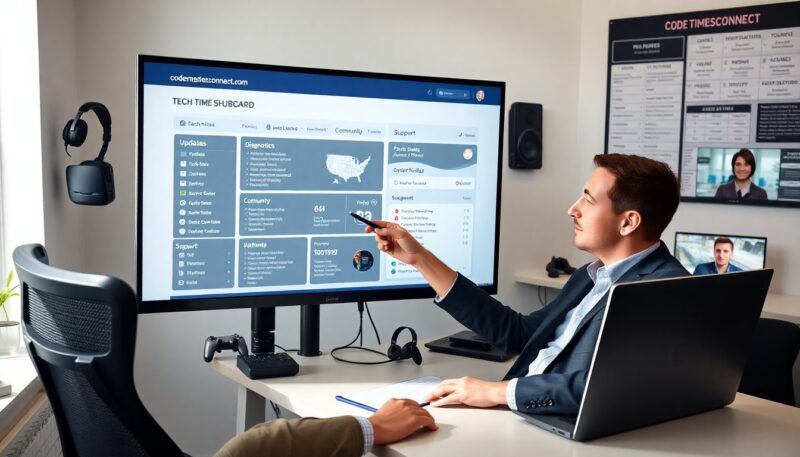
Tech Time With CodemastersConnect: How To Learn, Collaborate, And Ship Code Faster In 2026
 Eldimel Golpen
Tech Time CodemastersConnect helps developers learn, collaborate, and ship code faster. The platform pairs learners with mentors and peers. It offers live labs, project templates, and real-time tooling. Readers will see clear steps for setup, session rules, and ways to get help.
Key Takeaways
- Tech Time CodemastersConnect accelerates developer growth by pairing learners with mentors and offering live labs and project templates for hands-on coding experience.
- The platform’s integrated tooling supports seamless collaboration through low-latency audio, shared editors, and environment replay features, enhancing pair programming and mentorship sessions.
- New users can quickly get started by signing up with email or Git, completing onboarding tours, linking repos, and engaging in guided labs tailored to their skill level.
- Following best practices such as timely participation, role swapping during pair programming, and clear session agendas maximizes productivity and learning outcomes.
- Curriculum paths, mentorship programs, and badge tracking keep developers engaged and help teams align learning with real product needs for faster adoption.
- Robust support resources including a help center, community forum, and mentor office hours ensure users can troubleshoot issues and deepen their expertise effectively.
What CodemastersConnect and Tech Time Offer Developers Today
Tech Codemastersconnect offers live practice sessions. The platform gives guided labs and pair programming slots. It provides curated curriculum paths and role-based mentorship. Teams gain sandboxed environments and CI-ready templates. Individuals get skill checks and badge tracking. Managers see usage dashboards and outcome reports. Recruiters find vetted candidate activity and recorded sessions. The service supports multiple languages and common frameworks. The platform integrates with Git providers and issue trackers. Developers access on-demand recordings and follow-up exercises.
Key Features That Make Tech Time Different (Live Labs, Pairing, Tooling)
Tech Time CodemastersConnect focuses on hands-on work. Live labs run in isolated containers. Pairing uses low-latency audio and shared editors. Tooling links terminals, debuggers, and preview servers. The platform offers session templates for testing, CI, and deployment. It supports simultaneous voice and text notes. An integrated scorecard records skills and completion. Auto-save and replay let mentors review changes. Role controls let hosts set permissions. The system logs environment configs for reproducible demos. The firm adds new tooling via a plugin model.
How To Get Started: Account Setup, Onboarding, and First Session
A new user signs up with email or Git provider. The system prompts for role and preferred languages. The onboarding tour shows the dashboard and live lab browser. The user links a Git repo for project templates. The platform recommends a starter lab based on skill level. The first session runs a guided lab with a mentor or peer. The session captures code, terminal output, and notes. The user receives a completion badge and suggested next steps. Admins can invite teams and assign learning paths.
Best Practices For Participating In Tech Time Sessions
Participants join sessions on time and mute when not speaking. Hosts post a short agenda and success criteria. Pair programmers swap roles every 15 to 25 minutes. Reviewers leave focused, actionable comments. Participants run tests before asking for help. Mentors ask one question at a time. Everyone keeps sessions under one hour when possible. The group records checkpoints and a short summary. Teams set shared norms for code style and branching. The platform encourages follow-up tickets for larger work.
Maximizing Learning: Curriculum Paths, Mentorship, And Project Templates
Tech Time CodemastersConnect organizes content into clear paths. Each path lists objectives and required labs. Mentors review progress and recommend next labs. Project templates include starter code, tests, and CI config. Learners clone templates and run them in a sandbox. The platform awards micro-credentials after key milestones. Teams map templates to real products for faster adoption. The service schedules mentor office hours and lightning talks. Learners track time spent and skill gains on a dashboard. Admins export progress for performance reviews.
Collaboration Tips: Running Effective Pair Programming And Code Reviews
A pair starts by agreeing the goal and roles. One developer drives while the other observes and suggests. They swap roles at regular intervals. They run small, testable changes per cycle. The observer writes review notes during the session. They open a pull request for final review and link the session recording. Reviewers check tests, edge cases, and public APIs. Reviewers leave clear, prioritized comments. Teams use checklists for common issues. They reuse session templates to speed future pairs.
Troubleshooting Common Issues And Where To Find Support
Users who face connection issues restart the browser or try a wired network. If containers fail, the user re-run the lab or request an environment refresh. Auth problems resolve by reconnecting the Git provider or resetting tokens. For billing questions, the admin opens a support ticket. For platform bugs, the user files a bug and attaches session logs. The help center offers step-by-step guides and video walkthroughs. The community forum hosts tips and shared templates. Mentor office hours address deeper learning or account setup questions.